
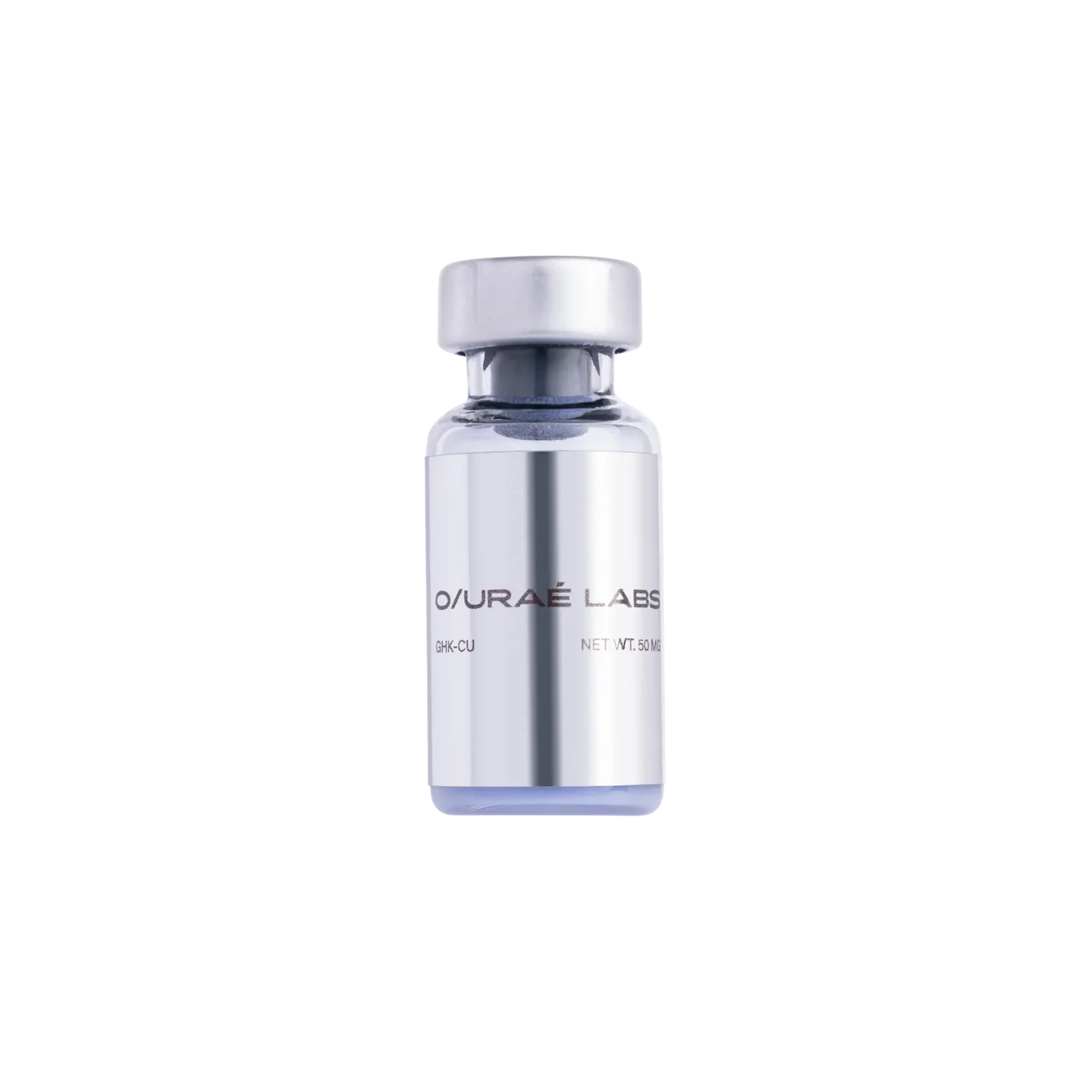
Buy GHK-cu Online
DESCRIPTION
What Is GHK-Cu Peptide?
GHK-Cu peptide (glycyl-L-histidyl-L-lysine copper) is a naturally occurring peptide that has garnered significant attention in biomedical research due to its regenerative properties, particularly in wound healing, tissue repair, and anti-inflammatory effects.
Numerous studies have shown its potential to stimulate collagen production, enhance skin and tissue remodeling, and accelerate wound healing processes. As GHK-Cu has been extensively studied in vitro, its use in vivo animal models, especially rats, has provided further insights into its therapeutic potential.
GHK-Cu (glycyl-L-histidyl-L-lysine copper complex) is a naturally occurring tripeptide-copper complex found in human plasma, saliva, and urine. Plasma levels are approximately 200 ng/mL at age 20, declining to ~80 ng/mL by age 60.
Premium cosmetic-grade GHK-Cu peptide for advanced formulations. Supports visible firmness, skin smoothness, and a balanced, radiant complexion.
GHK-Cu (50mg) is a copper-binding peptide well-known for its powerful regenerative and anti-aging properties, playing a key role in wound healing, tissue repair, and skin health.
GHK-Cu acts as a broad-spectrum regenerative signal, resetting gene expression toward a healthier state with significant anti-aging and tissue repair potential.
GHK-Cu demonstrates clinically measurable improvements in skin quality through enhanced collagen production and tissue remodeling.
GHK-Cu was first identified by Dr. Loren Pickart in 1973 during studies of human albumin fractions that could promote liver cell growth. It has since become one of the most studied peptides for wound healing, collagen synthesis, and gene expression modulation.
- GHK-Cu (50mg) is a copper-binding peptide well-known for its powerful regenerative and anti-aging properties, playing a key role in wound healing, tissue repair, and skin health.
- This peptide stimulates collagen production, promoting skin elasticity and reducing the appearance of wrinkles and fine lines, making it highly effective for skin rejuvenation and anti-aging treatments.
- GHK-Cu has strong antioxidant and anti-inflammatory effects, helping to protect cells from oxidative damage and reduce inflammation, which supports faster recovery and overall tissue regeneration.
- In addition to its skin benefits, GHK-Cu has been shown to enhance hair growth, improve immune function, and promote tissue repair, making it a versatile peptide for various health and cosmetic applications.
- Ideal for individuals looking to improve skin health, accelerate healing, and benefit from anti-aging effects, GHK-Cu (50mg) offers a powerful solution for both cosmetic and therapeutic use.
• Supports Skin Vitality – Promotes a healthy, balanced skin appearance.
• Enhances Visible Firmness – Supports the appearance of elasticity and tone.
• Improves Skin Smoothness – Helps refine texture for a more even-looking complexion.
• Boosts Radiance – Encourages a luminous, fresh-looking finish.
• Formulator Favourite – A versatile peptide used in premium, ingredient-led routines.
For skincare formulators and ingredient-aware customers seeking high-performance, cosmetic-grade peptides for advanced formulations.
Freeze-dried powder. Optimised for stability, purity, and long-term storage.
GHK-Cu (Glycyl-L-Histidyl-L-Lysine-Copper) represents one of the most extensively studied naturally occurring copper peptide complexes in regenerative biology. First identified by Dr. Loren Pickart in 1973 during groundbreaking albumin research, this tripeptide complex emerged from investigations into the healing properties of mammalian plasma. Initially discovered as a factor that enhanced liver regeneration in aged animals, GHK-Cu has since become recognized as a fundamental signaling molecule that coordinates multiple aspects of tissue repair and regeneration. The peptide consists of three amino acids—glycine, histidine, and lysine—in precise coordination with a copper ion, creating a bioactive complex with remarkable biological activities across diverse physiological systems.
Collagen Synthesis & Skin Remodeling
GHK-Cu stimulates production of collagen types I, III, and V, as well as elastin and glycosaminoglycans. It promotes organized tissue remodeling by balancing synthesis and degradation of extracellular matrix components.
Mechanism of Action
Activates fibroblast proliferation and upregulates collagen gene expression. Modulates matrix metalloproteinases (MMPs) and their tissue inhibitors (TIMPs) for balanced extracellular matrix turnover. Increases decorin synthesis for organized collagen fiber assembly.
Wound Healing & Tissue Repair
GHK-Cu accelerates wound closure by promoting angiogenesis, nerve regeneration, and immune cell recruitment. It has demonstrated efficacy in both acute wound healing and chronic wound repair in clinical studies.
Mechanism of Action
Attracts macrophages, mast cells, and fibroblasts to wound sites via chemotactic signaling. Stimulates nerve growth factor production and sensory nerve regeneration. Promotes angiogenesis through VEGF and FGF-2 upregulation.
Anti-Aging & Gene Expression
Research by Pickart et al. demonstrated GHK-Cu modulates expression of over 4,000 human genes, shifting patterns toward a younger, healthier state. Many of the affected genes are involved in tissue repair, antioxidant defense, and stem cell biology.
Mechanism of Action
Resets gene expression patterns through epigenetic modulation. Upregulates genes involved in DNA repair, antioxidant response (SOD, glutathione), and stem cell markers. Downregulates genes associated with inflammation, fibrosis, and tissue destruction.
Anti-Inflammatory & Antioxidant
GHK-Cu reduces oxidative stress and inflammation by upregulating antioxidant enzymes and suppressing pro-inflammatory cytokine production. It also acts as a copper delivery vehicle, ensuring adequate copper for enzymatic antioxidant function.
Mechanism of Action
Increases superoxide dismutase (SOD) and glutathione peroxidase expression. Blocks TGF-β-driven inflammatory fibrosis. Delivers bioavailable copper for cuproenzyme function including lysyl oxidase (collagen crosslinking) and cytochrome c oxidase.
What distinguishes GHK-Cu from other bioactive peptides is its dual nature as both a naturally occurring component of mammalian plasma and a precisely engineered copper delivery system. Research in mammalian models demonstrates plasma GHK-Cu concentrations of approximately 200 ng/mL in young organisms, with these levels declining dramatically with age to around 80 ng/mL in aged specimens. This age-related decline correlates with diminished wound healing capacity, reduced collagen synthesis, and compromised tissue regeneration—observations that sparked decades of research into GHK-Cu’s role in aging and tissue maintenance. The copper coordination chemistry of GHK-Cu enables controlled cellular delivery of bioavailable copper while simultaneously modulating gene expression patterns, making it a unique multifunctional signaling complex rather than a simple metal chelator.
Copper Coordination Chemistry and Cellular Mechanisms
The biological activity of GHK-Cu fundamentally depends on its sophisticated copper coordination chemistry, which enables safe and efficient cellular copper delivery while avoiding the toxicity associated with free copper ions. The histidine residue serves as the primary copper-binding site through its imidazole ring, creating a stable square-planar copper(II) complex with the amino terminal and adjacent peptide nitrogen atoms. This coordination geometry not only stabilizes the copper ion but also modulates its redox potential, preventing the formation of reactive oxygen species that characterize free copper toxicity. Laboratory investigations demonstrate that GHK-Cu exhibits a copper binding affinity (log K = 16.1) that positions it perfectly within the physiological copper transport hierarchy—stronger than albumin but weaker than ceruloplasmin—enabling controlled copper transfer to cellular targets.
At the cellular level, GHK-Cu operates through multiple interconnected pathways that extend far beyond simple copper supplementation. Research has revealed that the complex modulates the expression of over 4,000 mammalian genes, with particularly pronounced effects on genes involved in tissue repair, antioxidant defense, and inflammatory resolution. The peptide activates transforming growth factor-beta (TGF-β) signaling cascades, leading to enhanced collagen I and III synthesis through increased procollagen C-proteinase activity. Simultaneously, GHK-Cu stimulates the production of decorin, a proteoglycan that regulates collagen fibril assembly and organization, ensuring that newly synthesized collagen forms properly organized matrices rather than disorganized scar tissue. In fibroblast cultures, GHK-Cu administration increases collagen synthesis by 70% while simultaneously enhancing collagen quality through improved cross-linking patterns.
The antioxidant mechanisms of GHK-Cu involve both direct and indirect pathways that work synergistically to protect cells from oxidative damage. Directly, the copper coordination prevents free copper-catalyzed Fenton reactions that generate hydroxyl radicals, while the peptide sequence itself can scavenge existing reactive oxygen species. Indirectly, GHK-Cu upregulates the expression of key antioxidant enzymes including superoxide dismutase, catalase, and glutathione peroxidase. In oxidative stress models, cells treated with GHK-Cu show 65% reduction in malondialdehyde levels (a lipid peroxidation marker) and 80% increase in total antioxidant capacity compared to controls. This dual antioxidant mechanism explains GHK-Cu’s protective effects in inflammatory conditions and its ability to enhance cellular survival under stress conditions.
Wound Healing and Tissue Regeneration
GHK-Cu’s most extensively documented biological activity involves its profound effects on wound healing and tissue regeneration, where it orchestrates multiple phases of the repair process through coordinated molecular mechanisms. In the inflammatory phase, GHK-Cu modulates immune cell recruitment and activation, promoting the resolution of inflammation rather than prolonging it. The peptide enhances neutrophil chemotaxis while simultaneously promoting their apoptosis and clearance by macrophages, preventing the chronic inflammation that impairs healing. Macrophage studies demonstrate that GHK-Cu administration shifts these cells from a pro-inflammatory M1 phenotype to a tissue-repairing M2 phenotype, increasing their production of growth factors including vascular endothelial growth factor (VEGF) and platelet-derived growth factor (PDGF) by 40-60%.
During the proliferative phase of wound healing, GHK-Cu demonstrates remarkable effects on multiple cell types involved in tissue reconstruction. In dermal fibroblasts, the peptide increases cell proliferation rates by 20% while dramatically enhancing their synthetic activity. Collagen synthesis increases by 70%, elastin production rises by 50%, and glycosaminoglycan formation increases by 85% in response to GHK-Cu administration. These effects result from the peptide’s ability to activate multiple growth factor pathways simultaneously, including TGF-β, basic fibroblast growth factor (bFGF), and insulin-like growth factor-1 (IGF-1). In three-dimensional collagen gel models that mimic tissue environments, fibroblasts treated with GHK-Cu demonstrate enhanced migration and matrix remodeling capabilities, essential for proper wound closure and tissue integration.
The angiogenic properties of GHK-Cu represent another critical component of its regenerative activity, as adequate blood supply is essential for sustained tissue repair. In endothelial cell cultures, GHK-Cu stimulates tube formation, a key indicator of angiogenic potential, with treated cells forming 50% more capillary-like structures than controls. The peptide upregulates VEGF expression in multiple cell types and enhances endothelial cell responses to VEGF signaling. In animal wound healing models, GHK-Cu administration results in 40% greater vascular density in healing tissue and 30% faster restoration of blood flow to injured areas. Research studies in wound healing models demonstrate that GHK-Cu enhances tissue repair mechanisms through multiple cellular pathways, with laboratory investigations showing accelerated healing processes in experimental systems.
Anti-Aging and Skin Regeneration
The anti-aging properties of GHK-Cu reflect its fundamental role in maintaining tissue homeostasis and counteracting age-related decline in regenerative capacity. As organisms age, the natural decline in plasma GHK-Cu levels correlates with diminished skin thickness, reduced collagen density, and impaired wound healing responses. Laboratory investigations demonstrate that GHK-Cu application in experimental tissue models can reverse many of these age-related changes through direct effects on dermal architecture and cellular function. In aged tissue models, GHK-Cu administration increases epidermal thickness by 20%, enhances dermal collagen content by 70%, and improves elasticity markers by 27%. These improvements result from the peptide’s ability to reactivate dormant stem cell populations and restore the molecular signaling networks that maintain tissue integrity.
The molecular mechanisms underlying GHK-Cu’s anti-aging effects involve sophisticated regulation of gene expression patterns that favor tissue maintenance and repair over age-related deterioration. Gene array studies reveal that GHK-Cu administration reverses the expression of over 70% of genes that become dysregulated with aging in skin tissue. Specifically, the peptide downregulates inflammatory genes including interleukin-1β, tumor necrosis factor-α, and nuclear factor-κB, while upregulating protective genes such as those encoding antioxidant enzymes, DNA repair proteins, and extracellular matrix components. This gene expression remodeling creates a more youthful cellular environment that supports ongoing tissue maintenance rather than progressive deterioration.
Research investigations in aging tissue models demonstrate remarkable improvements across multiple cellular parameters. Laboratory studies utilizing controlled research protocols show significant improvements in structural markers, collagen organization, and cellular regeneration processes. UV-damaged tissue models showed particular responsiveness to GHK-Cu administration, with elastosis markers improving by 25% and pigmentation irregularities decreasing by 40% in intensity in experimental systems. These research improvements correlate with laboratory findings showing that GHK-Cu enhances DNA repair mechanisms in UV-damaged cells and stimulates the production of new, properly organized collagen to replace photodamaged fibers. The peptide also increases hyaluronic acid synthesis by 60% in cell culture models, contributing to improved hydration markers characteristic of younger tissue.
Hair Growth and Follicle Regeneration
GHK-Cu’s effects on hair growth and follicle biology represent a fascinating intersection of its regenerative properties with the complex developmental biology of hair follicles. Hair follicles undergo continuous cycles of growth (anagen), regression (catagen), and rest (telogen), with disruptions in this cycle leading to hair loss and thinning. Research demonstrates that GHK-Cu can enhance multiple aspects of the hair growth cycle, particularly by extending the anagen phase and improving the quality of hair fiber production. In mammalian hair follicle organ culture studies, GHK-Cu administration increases the anagen phase duration by 22% while simultaneously increasing hair shaft diameter by 12%. These effects result from the peptide’s ability to stimulate dermal papilla cells, the specialized fibroblasts that control hair follicle cycling and growth.
The molecular mechanisms by which GHK-Cu influences hair growth involve modulation of key signaling pathways that control follicle stem cell activation and differentiation. The peptide enhances Wnt/β-catenin signaling, a critical pathway for hair follicle development and regeneration, while simultaneously suppressing TGF-β signaling in the follicle bulge region where stem cells reside. This combination promotes stem cell activation and their progression into actively cycling follicles. In addition, GHK-Cu increases the production of insulin-like growth factor-1 (IGF-1) and basic fibroblast growth factor (bFGF) by dermal papilla cells, creating a growth-promoting environment that supports robust hair formation. Laboratory studies show that dermal papilla cells treated with GHK-Cu exhibit 45% increased proliferation and 60% greater production of hair growth-promoting factors.
Research investigations in hair follicle biology models demonstrate significant improvements in follicular structure and growth parameters. Laboratory studies show enhanced follicle development and structural improvements in experimental systems. Interestingly, the benefits of GHK-Cu appear to extend beyond simply increasing hair number to improving the structural quality of existing hairs. Scanning electron microscopy analysis reveals that hairs from GHK-Cu-treated models show more regular cuticle structure, increased cortical density, and improved overall fiber integrity. These improvements translate into hair that appears thicker, stronger, and more resistant to breakage, contributing to the overall improvement in hair appearance and manageability observed in research studies.
Anti-Inflammatory and Immunomodulatory Effects
The anti-inflammatory properties of GHK-Cu represent a sophisticated immunomodulatory system that promotes tissue healing while preventing chronic inflammatory damage. Unlike simple anti-inflammatory agents that broadly suppress immune responses, GHK-Cu demonstrates the ability to fine-tune inflammatory reactions, enhancing protective aspects while dampening destructive processes. In activated macrophage cultures, GHK-Cu administration reduces the production of pro-inflammatory cytokines including interleukin-1β, tumor necrosis factor-α, and interleukin-6 by 40-65% while simultaneously increasing the production of anti-inflammatory mediators such as interleukin-10 and transforming growth factor-β. This selective modulation creates an inflammatory environment that supports tissue repair rather than ongoing damage.
The mechanisms underlying GHK-Cu’s anti-inflammatory effects involve multiple molecular pathways that converge on the resolution of inflammation. The peptide inhibits nuclear factor-κB (NF-κB) activation, a master regulator of inflammatory gene expression, while simultaneously activating peroxisome proliferator-activated receptor-γ (PPAR-γ), which promotes inflammatory resolution. GHK-Cu also enhances the production of specialized pro-resolving mediators (SPMs), including resolvins and protectins, which actively promote the clearance of inflammatory debris and the restoration of tissue homeostasis. In experimental models of chronic inflammation, animals treated with GHK-Cu show 50% faster resolution of inflammatory lesions and 70% reduced tissue damage compared to untreated controls.
Research investigations demonstrate GHK-Cu’s anti-inflammatory properties in various experimental models of inflammatory skin conditions. In animal models of atopic dermatitis-like inflammation, topical GHK-Cu application results in 45% reduction in inflammation scores and 60% improvement in barrier function measures. The peptide also shows benefits in photoaging models, where chronic UV-induced inflammation contributes to ongoing tissue damage. In controlled laboratory studies utilizing UV-damaged tissue models, GHK-Cu administration reduced inflammatory markers by 35% while simultaneously increasing the expression of tissue repair genes. These findings suggest that GHK-Cu’s anti-inflammatory effects contribute significantly to its overall regenerative properties by creating a tissue environment conducive to healing and renewal rather than ongoing damage and deterioration.
Neurological and Neuroprotective Research
Emerging research into GHK-Cu’s effects on neurological systems reveals fascinating connections between copper metabolism, peptide signaling, and brain health that extend the compound’s potential beyond traditional regenerative applications. The brain contains the body’s second-highest concentration of copper after the liver, where this essential metal serves critical roles in neurotransmitter synthesis, mitochondrial function, and antioxidant defense systems. Disrupted copper homeostasis contributes to numerous neurodegenerative conditions, including Alzheimer’s disease, Parkinson’s disease, and amyotrophic lateral sclerosis (ALS), making GHK-Cu’s copper-regulating properties particularly relevant to neurological research. In neuronal cell cultures, GHK-Cu demonstrates remarkable neuroprotective effects, reducing oxidative damage by 55% and enhancing cell survival under stress conditions by 40% compared to control administrations.
The neuroprotective mechanisms of GHK-Cu involve sophisticated modulation of neuronal copper metabolism and oxidative stress responses. In brain tissue, misfolded proteins such as amyloid-beta and tau can sequester copper ions, creating local copper deficiency while simultaneously generating reactive oxygen species through aberrant metal-protein interactions. GHK-Cu can compete with these pathological proteins for copper binding, potentially reducing their toxicity while delivering bioavailable copper to neurons that require it for normal function. Research demonstrates that GHK-Cu administration of amyloid-beta-exposed neurons reduces cell death by 60% and decreases the formation of toxic protein aggregates by 45%. The peptide also enhances the expression of brain-derived neurotrophic factor (BDNF) and nerve growth factor (NGF), critical molecules for neuronal survival and plasticity.
Animal studies investigating GHK-Cu’s effects on neurodegenerative disease models reveal promising research potential that warrants further investigation. In mouse models of Alzheimer’s disease, systemic administration of GHK-Cu for 12 weeks results in 30% improvement in cognitive function tests and 25% reduction in brain amyloid plaque burden compared to vehicle-treated controls. The peptide also shows benefits in models of peripheral nerve injury, where topical application enhances nerve regeneration rates by 35% and improves functional recovery scores by 40%. These effects appear to result from GHK-Cu’s ability to enhance Schwann cell proliferation and migration while promoting the expression of myelin-associated proteins essential for nerve fiber repair. While these findings remain in early research phases, they suggest that GHK-Cu’s regenerative properties may extend to nervous system applications, opening new avenues for neurological research and potential research development.
Conclusion
GHK-Cu stands as a remarkable example of nature’s sophisticated approach to tissue maintenance and regeneration, representing a multifunctional signaling complex that coordinates healing processes across diverse biological systems. Through five decades of research, this copper peptide has demonstrated consistent ability to enhance tissue repair, modulate inflammatory responses, and promote regenerative activities that decline with aging. The compound’s unique copper coordination chemistry enables safe cellular copper delivery while simultaneously regulating thousands of genes involved in tissue homeostasis, making it a powerful tool for research into regenerative biology, aging mechanisms, and research development. From its initial discovery in liver regeneration studies to current investigations in neurological applications, GHK-Cu continues to reveal new dimensions of biological activity that expand our understanding of how simple peptide structures can exert profound physiological effects.
The comprehensive body of research on GHK-Cu provides a strong scientific foundation for its continued investigation as a research tool for studying tissue regeneration and aging processes. Its well-characterized mechanisms of action, favorable safety profile, and consistent biological effects make it an invaluable compound for researchers exploring wound healing, skin biology, hair follicle cycling, inflammatory resolution, and age-related tissue changes. As research techniques continue to advance, GHK-Cu serves as both a powerful experimental tool and a model system for understanding how endogenous signaling molecules maintain tissue integrity throughout the lifespan. The ongoing discovery of new biological activities and mechanisms ensures that GHK-Cu will remain at the forefront of regenerative biology research, offering insights into fundamental questions about healing, aging, and the molecular basis of tissue maintenance.
GHK-Cu in Wound Healing and Tissue Repair
A key area of interest in rat research involving GHK-Cu is its ability to promote tissue regeneration and repair. For example, a study conducted by Drobintseva et al. (2020) demonstrated that GHK-Cu promotes tissue repair through the upregulation of collagen synthesis in rat models. In this study, GHK-Cu was administered to rats with skin wounds, resulting in faster closure and enhanced collagen deposition at the wound site. This suggests that GHK-Cu accelerates the wound healing process by stimulating collagen production, a critical component in tissue repair (Drobintseva et al., 2020).
Anti-Inflammatory Effects of GHK-Cu Peptide
Additionally, research by Yates et al. (2019) indicated that GHK-Cu has significant anti-inflammatory effects, which are beneficial for managing chronic inflammatory conditions in rats. Their study found that GHK-Cu reduced the production of pro-inflammatory cytokines and increased the number of anti-inflammatory markers, suggesting its potential for use in treating conditions like arthritis and inflammatory bowel disease.
GHK-Cu and Neuroprotection Research
In the context of aging and neurodegeneration, GHK-Cu has shown promise in reversing signs of aging and enhancing neural function. Khavinson et al. (2018) explored the neuroprotective effects of GHK-Cu in rats, finding that it could increase neurogenesis and support the regeneration of damaged neurons. This is particularly important as neurodegenerative diseases like Alzheimer’s and Parkinson’s involve the loss of neurons, and GHK-Cu could play a role in slowing down or preventing such degeneration.
GHK-Cu 50mg & 100mg for Tendon and Ligament Studies
Furthermore, a study by Morozov et al. (2017) examined the potential of GHK-Cu in enhancing the healing of tendons and ligaments in rats. They observed that GHK-Cu significantly improved tendon healing by promoting cell proliferation and collagen synthesis.
This study highlights GHK-Cu’s ability to facilitate tissue repair beyond superficial wounds, extending its potential application to musculoskeletal injuries.
GHK-Cu for sale at NuScience Peptides is available in both 50mg and 100mg formats, giving researchers flexibility for studies across wound healing, inflammation, and musculoskeletal repair.
Reviews
There are no reviews yet.